Moisture Mitigation Systems in University Park, MD
Moisture mitigation systems in University Park, Maryland, for the pre-war slabs that push ground vapor up through the concrete, tested first and primed where the readings demand it.
Moisture Mitigation Systems in University Park, MD by University Park Epoxy Flooring Company
Licensed and BondedMHIC 15522130 Years Combined ExperienceVeteran FriendlyFinancing Available
Moisture vapor is the quiet cause of most epoxy failures in older towns. Slabs poured before vapor barriers were standard sit directly on the soil, and ground moisture moves up through them with the seasons. A coating sealed over active vapor will blister, bubble, or peel as that pressure builds.
University Park's setting adds to it. Wells Run threads through town, the canopy keeps lots shaded and slow to dry, and humid summers load the soil. That is why we test every slab before we coat it, and why mitigation is a standard line in our scopes here rather than a surprise.
How Mitigation Works
The system slows vapor to a rate the coating above can live with permanently.
Moisture readings taken at several points across the slab
Results explained in plain language before any decision
Mitigation primer applied across the full floor where readings run high
Coating system built directly over the cured primer
Honest guidance when a slab should dry or be rebuilt first
Where We Find High Readings in Town
Basements near Wells Run and the town park test high most often, along with slabs on the shaded north sides of houses and garages whose floors sit low against the grade. Additions poured without barriers are frequent offenders too.
Mitigation costs less than a failed floor. Adding the primer during the original build is a fraction of grinding off a blistered coating and starting over, which is why we raise it early and in writing.
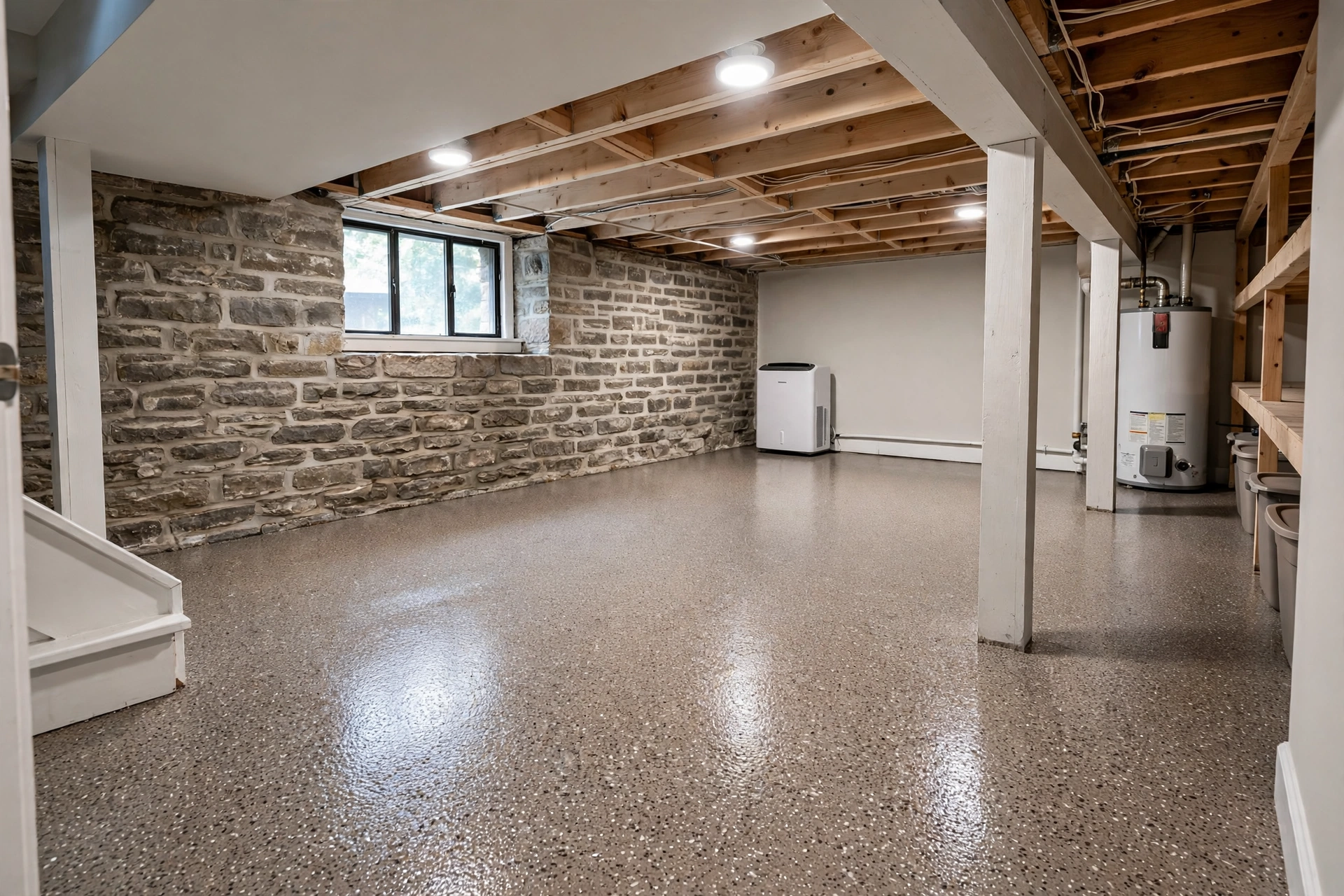
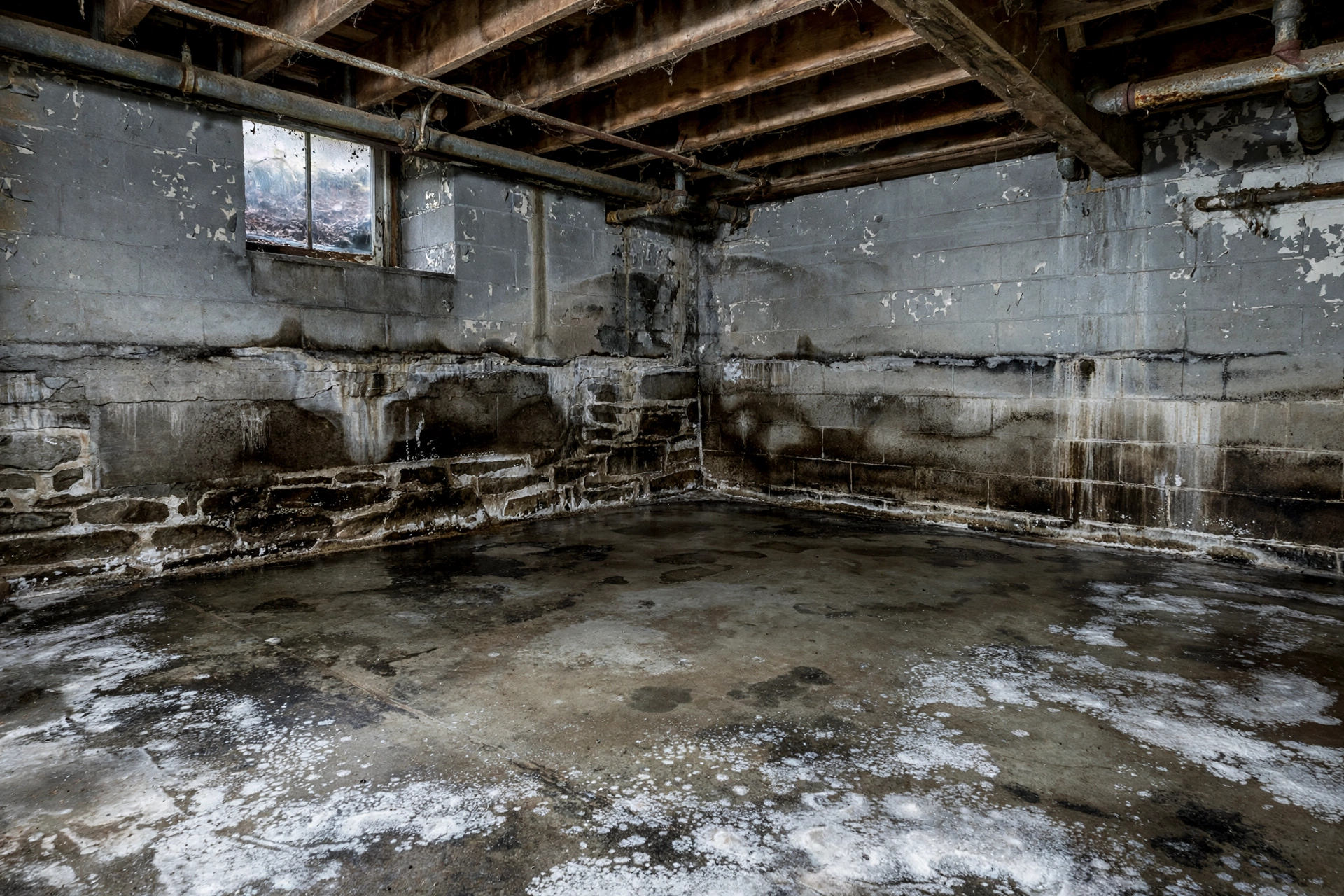
Recent Project: Moisture Mitigation in a Wells Run Basement
BEFOREAFTER
A basement near Wells Run tested high at every reading point, with the worst numbers along the wall below grade. We ground the slab, applied a full moisture mitigation primer, and finished with a solid color system in a warm gray. Two winters on, the floor shows no blistering, and the room serves as the family's office and guest space.
Turnaround
Three days on site including primer cure, room in use after one week.
Final Price
$4,940
Request a Moisture Mitigation Systems Quote in University Park, MD